
Marketing Funnel Strategy for Service Businesses: From Traffic to Paying Clients.
- smartleadsads
- Feb 13
- 4 min read
Introduction
Many service businesses struggle with a common problem: they get traffic, inquiries, or social media engagement—but very few paying clients. The issue isn’t visibility; it’s the lack of a structured marketing funnel strategy.
Unlike product-based businesses, service businesses rely heavily on trust, expertise, and decision-making timelines. Potential clients rarely convert on their first visit. Without a proper marketing funnel strategy, traffic leaks at every stage, leading to wasted marketing spend and inconsistent revenue.
In this blog, we’ll break down how a marketing funnel strategy for service businesses works, why it’s essential, and how to move prospects smoothly from traffic to paying clients.
What Is a Marketing Funnel Strategy?
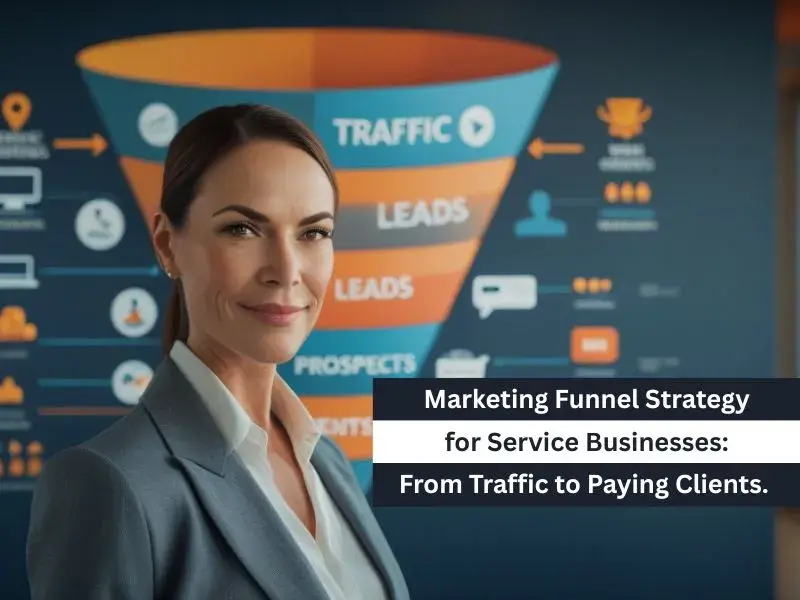
A marketing funnel strategy is a structured system that guides potential clients through different stages of the buying journey—from awareness to conversion.
For service businesses, a funnel typically includes:
Awareness (attracting the right audience)
Consideration (building trust and authority)
Conversion (turning leads into paying clients)
Retention (long-term relationships and referrals)
Instead of relying on one-off tactics, a marketing funnel strategy creates predictable and scalable client acquisition.
Why Service Businesses Need a Funnel-Based Approach
Service businesses face unique challenges:
Longer decision cycles
High involvement and trust requirements
Custom pricing and solutions
Without a marketing funnel strategy:
Visitors don’t understand the value
Leads aren’t nurtured properly
Sales conversations start too early or too late
A well-designed funnel ensures the right message reaches the right person at the right time.
Stage 1: Traffic & Awareness – Attract the Right Audience
The first step in any marketing funnel strategy is awareness. But traffic alone is not the goal—relevant traffic is.
Effective awareness channels include:
Search engine optimization (SEO)
Educational content (blogs, videos, LinkedIn posts)
Paid ads targeting problem-aware audiences
Referrals and partnerships
For service businesses, educational content works best because it positions you as an expert rather than a seller.
Key focus:
Solve real problems
Answer common questions
Address pain points clearly
This builds the foundation for trust early in the funnel.
Stage 2: Lead Capture – Turn Visitors into Leads
Traffic without lead capture is wasted opportunity.
A strong marketing funnel strategy includes clear lead magnets such as:
Free consultations
Audits or assessments
Guides, checklists, or templates
Webinars or strategy sessions
Your website and landing pages should clearly communicate:
Who the service is for
What problem it solves
What the next step is
Simple, focused calls-to-action (CTAs) significantly improve lead conversion.
Stage 3: Lead Nurturing – Build Trust before the Sale
Most service clients are not ready to buy immediately.
This is where many businesses fail—by pushing sales too early.
A marketing funnel strategy for service businesses uses nurturing methods like:
Email sequences
Educational follow-ups
Case studies and testimonials
Social proof and authority content
The goal is to move prospects from interest to confidence. Trust is the real currency in service-based funnels.
Stage 4: Conversion – From Leads to Paying Clients
Conversion is not about pressure; it’s about clarity.
At this stage, your marketing funnel strategy should:
Address objections
Reinforce value and outcomes
Make the decision easy
Effective conversion assets include:
Consultation calls
Strategy sessions
Proposal frameworks
Clear pricing or scope explanation
For service businesses, personal interaction plays a critical role. A structured discovery process increases close rates and filters unqualified leads.
Stage 5: Retention & Upsell – The Most Ignored Funnel Stage
Many service businesses stop once a client pays. This is a mistake.
A complete marketing funnel strategy includes retention through:
Onboarding processes
Regular check-ins
Value-driven communication
Upsells, cross-sells, and referrals
Retention increases lifetime value and reduces the need for constant new lead generation.
Common Funnel Mistakes Service Businesses Make
Without a clear marketing funnel strategy, service businesses often:
Drive traffic to generic homepages
Skip lead nurturing
Rely only on referrals
Ignore analytics and funnel drop-offs
These mistakes lead to unpredictable growth and burnout.
How a Marketing Funnel Strategy Improves ROI
A well-structured marketing funnel strategy helps service businesses:
Convert more leads with the same traffic
Reduce customer acquisition costs
Improve sales consistency
Scale without relying on luck
Instead of guessing, businesses operate with clarity and control.
Tools That Support a Marketing Funnel Strategy
While strategy matters more than tools, the right stack helps:
CRM systems to track leads
Email automation for nurturing
Analytics tools to measure funnel performance
Landing page builders for focused CTAs
Tools support the funnel—but the strategy drives results.
Who Benefits Most from a Marketing Funnel Strategy?
A marketing funnel strategy is ideal for:
Consultants and coaches
Agencies and service providers
B2B service businesses
Local and professional services
If your business depends on trust and expertise, funnels are non-negotiable.
Conclusion
Traffic alone doesn’t build a business—systems do. A clear marketing funnel strategy transforms random visitors into nurtured leads and paying clients.
For service businesses, funnels create structure, improve trust, and deliver predictable growth. When each stage of the funnel is intentional, marketing stops feeling chaotic and starts driving measurable results.
If your service business is generating attention but not conversions, the solution isn’t more traffic—it’s a better marketing funnel strategy.


Comments