
Marketing Funnel Strategy for Service Businesses That Want Consistent Leads
- smartleadsads
- Feb 27
- 4 min read
Introduction
For most service businesses, the biggest challenge isn’t delivering results — it’s generating consistent, qualified leads. Many business owners rely on referrals, random social media posts, or occasional ad campaigns. While these tactics may bring short-term inquiries, they rarely create predictable growth.
That’s where a well-defined marketing funnel strategy changes everything.
A structured marketing funnel strategy helps service businesses move potential clients from awareness to decision in a systematic, measurable way. Instead of chasing leads, you build a process that nurtures trust, qualifies prospects, and converts them into paying clients — consistently.
In this guide, you’ll learn how to design a high-converting marketing funnel strategy tailored specifically for service-based businesses.
What Is a Marketing Funnel Strategy?
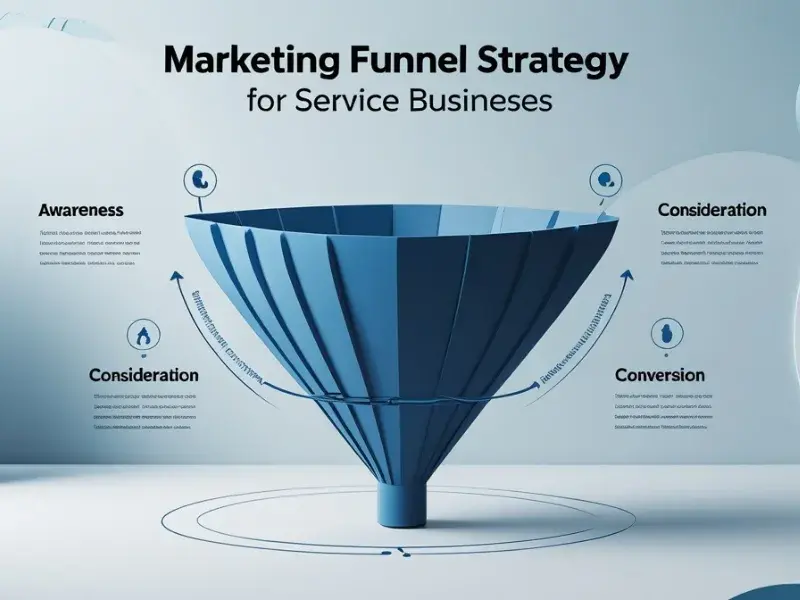
A marketing funnel strategy is a structured plan that guides potential customers through different stages of the buying journey:
Awareness – People discover your business.
Interest – They engage with your content or offer.
Consideration – They evaluate your services.
Decision – They become paying clients.
Retention & Referral – They return or recommend you.
For service businesses, this process is critical because services are intangible. Clients must trust you before buying. A strong funnel builds that trust step by step.
Why Service Businesses Struggle Without a Funnel
Without a proper marketing funnel strategy, businesses face:
Inconsistent lead flow
Low-quality inquiries
High ad spend with low ROI
Long sales cycles
Poor conversion rates
Most businesses focus only on the top of the funnel (posting content or running ads) but ignore nurturing and conversion systems. A complete funnel ensures no opportunity is wasted.
The 5-Step Marketing Funnel Strategy for Service Businesses
1. Define Your Ideal Client Clearly
Before building a funnel, you must define:
Who is your ideal client?
What problems are they actively trying to solve?
What objections do they have?
What results do they expect?
A successful marketing funnel strategy starts with clarity. If your targeting is broad, your messaging becomes weak — and weak messaging reduces conversions.
Example: A business consultant targeting “all startups” will struggle. But targeting “early-stage SaaS founders generating ₹10–50 lakhs annually” creates precision.
2. Top of Funnel (TOFU): Generate Targeted Traffic
This is where potential clients first discover you.
Effective TOFU channels for service businesses include:
SEO-optimized blogs
LinkedIn content
YouTube educational videos
Paid ads (Google & Meta)
Webinars
Industry partnerships
The goal here isn’t immediate sales — it’s visibility and awareness.
Your marketing funnel strategy should ensure that all traffic is directed toward a clear next step, not just your homepage.
3. Middle of Funnel (MOFU): Capture & Nurture Leads
This is where many businesses fail.
Once someone engages with your content, you must capture their information through:
Free guides
Checklists
Strategy templates
Case studies
Free consultations
Webinars
After capturing leads, nurture them with:
Email sequences
Educational content
Success stories
Problem-solving insights
Your marketing funnel strategy must build trust during this phase. Service businesses sell expertise, and expertise requires proof.
4. Bottom of Funnel (BOFU): Convert With Authority
At this stage, your prospect is aware of their problem and evaluating options.
To convert effectively, provide:
Clear service pages
Case studies with measurable results
Testimonials
Transparent process explanation
Clear pricing structure (or value-based positioning)
For service businesses, clarity equals confidence.
Your marketing funnel strategy should make it easy to:
Book a call
Schedule a consultation
Request a proposal
The simpler the action, the higher the conversion rate.
5. Post-Conversion: Retain and Multiply Revenue
The funnel doesn’t end after a client signs.
A complete marketing funnel strategy includes:
Onboarding systems
Upsell pathways
Referral programs
Client success tracking
Ongoing communication
Happy clients are your strongest marketing asset. Retention reduces acquisition cost and increases lifetime value.
Key Metrics to Track in Your Marketing Funnel Strategy
To ensure consistent leads, monitor:
Website traffic growth
Lead conversion rate
Cost per lead
Consultation booking rate
Sales closing rate
Customer lifetime value
Tracking transforms your funnel from guesswork into a scalable system.
Common Mistakes in Marketing Funnel Strategy
1. Driving Traffic Without a Lead Capture System
If visitors leave without giving contact details, you lose future opportunities.
2. Overcomplicating the Funnel
Keep it simple. Clear steps convert better than complex automation.
3. Ignoring Follow-Ups
Most clients don’t buy on first interaction. Follow-ups matter.
4. Weak Positioning
If your offer sounds generic, your funnel won’t convert.
Example Funnel Structure for a Service Business
Here’s a simple but effective funnel:
SEO blog or LinkedIn post
Free downloadable strategy guide
Automated email sequence
Free strategy consultation call
Customized proposal
Onboarding
This structure ensures prospects move logically from awareness to decision.
How Long Does It Take to See Results?
A marketing funnel strategy is not an overnight solution.
Paid funnels may generate leads within weeks.
SEO funnels may take 3–6 months.
Authority-based funnels build stronger long-term growth.
Consistency and optimization are key.
Why a Clear Funnel Creates Consistent Leads
When you implement a proper marketing funnel strategy:
Leads become predictable.
Revenue becomes stable.
Marketing becomes measurable.
Scaling becomes easier.
Instead of chasing clients, your system brings them to you.
This shift changes the way service businesses operate — from reactive selling to proactive growth.
Conclusion
Service businesses don’t fail because they lack expertise. They fail because they lack structure.
A well-designed marketing funnel strategy transforms random marketing efforts into a systematic growth engine. It guides prospects through awareness, builds trust, eliminates objections, and converts them into long-term clients.
If your goal is consistent leads, predictable revenue, and scalable growth, building a clear marketing funnel strategy is not optional — it’s essential.
When done right, your funnel becomes your most valuable business asset — working for you 24/7 to attract, nurture, and convert high-quality clients.
The question is no longer whether you need a funnel — it’s how soon you’re ready to build one.



Comments